Ash Reshteh, a Staple of Iranian Nazri Tables
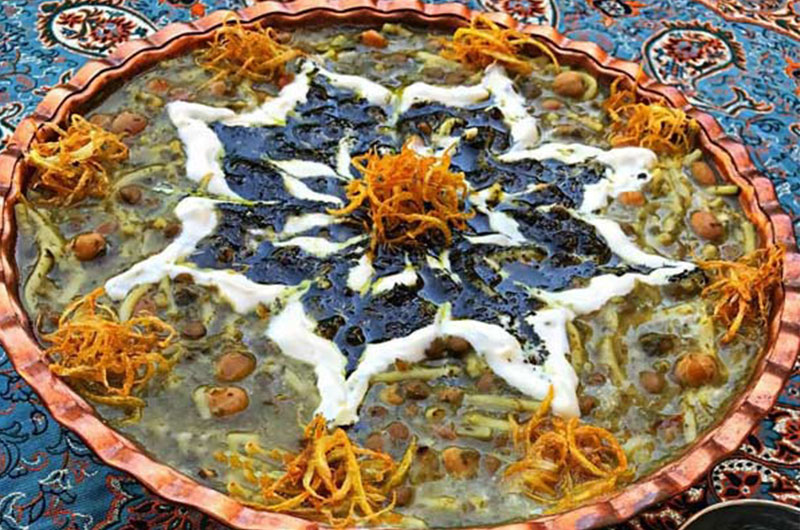
Ash Reshteh is a constant presence on Iranian nazri tables. It is one of the most delicious and comforting Iranian soups—so appealing that almost everyone wants to try it at least once.
When traveling along the northern roads of Iran toward the Caspian Sea, you will often see traditional restaurants or mobile soup vendors along the way serving Ash Reshteh. A hot bowl of Ash Reshteh, especially in autumn or winter, is one of the simple pleasures of life and a beloved excuse for travel among Iranians. On cold winter nights, young people go to parks or recreational areas and treat themselves to steaming bowls of Ash Reshteh. I highly recommend cooking and tasting this wonderful soup yourself.
Before starting this delicious and nourishing recipe, keep the following points in mind.
First, be sure to soak the legumes overnight. Keep them in water for 6 to 12 hours and change the water several times so that their bloating properties are reduced.
Important Tips for Cooking Ash Reshteh
Second, cook each legume separately. This allows you to better control the texture of the soup. Lentils do not need soaking and should be cooked separately and only until half-done so they do not become mushy.
Another important point is fried onions. Although fried onions add great flavor to Ash Reshteh, overly dark fried onions will make the soup bitter. It is better to add a moderate amount of fried onions to the soup itself and reserve the rest for garnish, so anyone who wishes can serve more alongside the soup and kashk.
The herbs used in Ash Reshteh include leeks, parsley, cilantro, dill, and spinach. The proportions are usually equal, but depending on personal taste, some people may increase or decrease certain herbs. The most important point is the amount of dill used. Too much dill can make the dish bitter, so if you adjust the proportions, be careful not to add too much dill.
Ash Reshteh is generally prepared using two methods, and both are explained here. The first is the restaurant-style method, in which the aroma and freshness of the herbs are more prominent. Because the herbs are added later in this method, the soup has a better color and a fresher herbal flavor.
Homemade Method of Ash Reshteh
In the homemade method, the herbs are cooked first.
Step 1: Preparing the Legumes
As in the restaurant method, soak the legumes in advance and change the water several times over 6 to 12 hours. Cook the chickpeas and beans separately.
Step 2: Cooking the Herbs
Instead of preparing the fried onion base first, place a pot on the stove, bring water to a boil, add the herbs, and allow them to cook completely. At the same time, prepare the fried onions separately and set them aside.
Step 3: Adding the Flour
Mix the flour with boiling water and strain the mixture to remove any lumps. Once the herbs are fully cooked, add this mixture to the pot and let it boil for a few minutes.
Step 4: Adding the Legumes
Add the cooked legumes and half-cooked lentils to the herbs and let them simmer together until the soup thickens and becomes well integrated.
Step 5: Adding the Noodles
After the herbs and legumes have simmered together for about 30 minutes and the soup has settled, add the noodles gradually. In the traditional method, kashk is usually not added directly to the soup and is instead served on the side. After 15 to 20 minutes, you may add fried onions, fried mint, and fried garlic.
Step 6: Adding Fried Onions
Add half of the fried onions, garlic, and mint to the soup and let it boil for another five minutes. Add salt at this stage and allow the soup to fully settle.
Final Step: Serving
Turn off the heat and let the soup rest for 10 minutes. Serve in bowls and garnish with the remaining fried onions, fried garlic, fried mint, and kashk.
In this method, the soup is slightly darker in color, and kashk is usually served separately so each person can add the desired amount according to their taste.
🟥 Common Mistakes in Cooking Ash Reshteh
- Do not add cold water to the soup.
- It causes thermal shock, flour lumps, and sticking.
- Do not over-brown the fried onions.
- Burnt onions result in a bitter taste.
- Do not use too much dill.
- Excess dill gives a strong and bitter flavor.
- Do not add the noodles too early.
- Early-added noodles become mushy and lose their shape.
- Do not add unboiled kashk to the soup.
- It is unhygienic and negatively affects the flavor.
- Do not fully cover the pot.
- The soup should simmer partially uncovered to maintain proper color and taste.
Restaurant-Style Ash Reshteh
Course: Appetizer, Asian, World CuisinesDifficulty: Easy6
servings2
hours2
hoursIngredients
1 kg Ash herbs (leeks, parsley, cilantro, spinach, dill)
½ cup Chickpeas
½ cup Pinto beans
½ cup White beans
½ cup Lentils
200–250 g Ash noodles
4 large Onions
250–350 g Kashk
1–2 tablespoons Flour
4 cloves (optional) Garlic
2 tablespoons Dried mint
1 teaspoon Turmeric
to taste Salt and pepper
as needed Oil
Directions
- Step 1: Preparing the Legumes
Soak the chickpeas, pinto beans, and white beans in water for 6 to 12 hours, changing the water several times to reduce bloating. Cook each legume separately. Cook the lentils in a separate pot until half-done so they do not break down in the soup. - Step 2: Preparing the Fried Onions (Soup Base)
Wash the onions and slice them thinly. Fry them in a pan with a little oil until lightly golden. (For caramelized onions, refer to the caramelized onion recipe.) Before adding turmeric, remove half of the onions and set them aside for garnish. Add the turmeric and sauté for another 30 seconds. Then add the flour and cook briefly until the raw smell disappears. This step gives the soup a rich, glossy texture and proper consistency. - Step 3: Adding Water and Legumes
At this stage, add water to the fried onions. The water must be boiling, because adding cold water at this point can cause:
the fried onions to tighten and become rubbery
the flour to form lumps
the turmeric color to darken and dull
the soup to take longer to come together
the soup to stick to the bottom of the pot
In contrast, adding boiling water allows:
the base ingredients to dissolve completely
the flour to thicken the soup evenly
the soup to maintain a bright, professional color
faster and better consistency
Add the cooked chickpeas and beans along with the half-cooked lentils, and let everything simmer gently for 20 to 30 minutes until the flavors are well combined. - Step 4: Adding the Herbs
Add the finely chopped herbs to the soup and let them cook for 20 to 30 minutes. Keep the heat low so the herbs cook through without darkening. - Step 5: Adding the Noodles
Break the noodles into two or three pieces and add them gradually. Stir every few minutes to prevent sticking. The noodles need about 15 to 20 minutes to cook and soften. - Step 6: Adding Kashk
Mix the kashk with boiling water and simmer briefly, then add it to the soup. Let the soup boil with the kashk for about five minutes, then add salt. Salt is added at the end because both kashk and noodles already contain salt. At this stage, you may also add some fried garlic or fried mint if desired. - Final Step: Serving
Let the soup rest for 10 minutes so it fully settles. Serve in bowls and garnish with fried onions, kashk, fried garlic, and fried mint. Enjoy.
Notes
- 🟩 Reader Gift
Make sure to send me a photo or video of your cooked Ash Reshteh so I can feature the best submissions under this post.
The best photo will receive a beautiful and delicious PDF cookbook as a gift.
Just be sure to enter your email address correctly so I can send it to you.
Ash Reshteh usually becomes bitter due to over-browned fried onions, burnt fried mint, or using too much dill. Controlling these ingredients prevents bitterness.
Why doesn’t Ash Reshteh become thick and glossy?
A lack of spinach, undercooked legumes, or not adding a small amount of flour can result in a watery soup with little body
In the restaurant-style method, kashk should be boiled separately and added during the final stages of cooking. In the traditional homemade method, kashk is usually served on the side