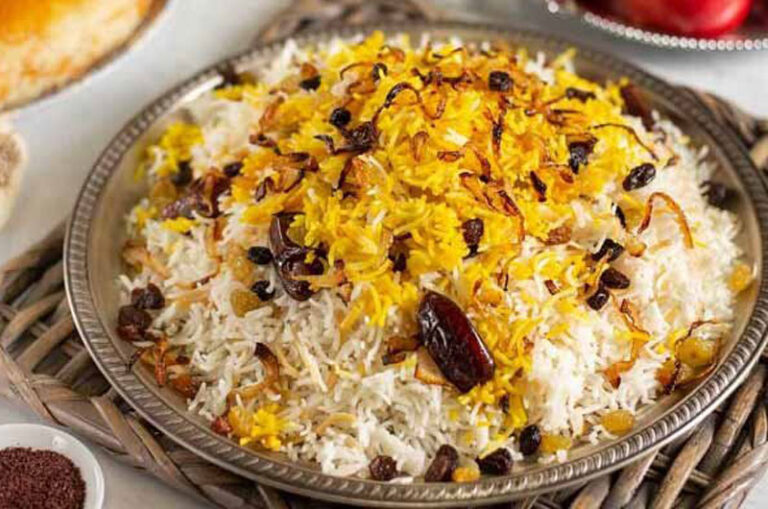
Sabzi Polo ba Mahi; One of Iran’s Nostalgic Dishes
Iranians consider Sabzi Polo ba Mahi (herbed rice with fish) one of their most special dishes.
On occasions such as Nowruz, Yalda Night, and other special Iranian celebrations, families prepare and serve this dish as one of the main foods on the table.
It is very similar to Christmas turkey, which in our old cartoons was shown as a symbol of warm, joyful winter Christmas nights.
This dish is nutritious, completely healthy, and for many Iranian families, it is also a bit expensive.
Type of Sabzipolo Ba Mahi recipe
Although different types of fish give this dish different flavors, the restaurant-style method of cooking Sabzi Polo ba Mahi is almost the same throughout Iran.
Iran is a vast country that stretches from the Sea of Oman and the Persian Gulf in the south, where people enjoy flavorful sea fish, to the Caspian Sea in the north, known for its famous white fish.
You can use any type of fish you like and cook it in the Iranian way.
In some cities, this dish is prepared with drained rice (abkesh), while in other regions it is cooked as dum-style rice (kateh).
However, in general, urban restaurants usually serve it in the drained rice style, while traditional restaurants near northern or southern cities often prepare it as kateh.
I will explain both methods so you can choose whichever one you prefer.
4
servings30
minutes40
minutes300
kcalIngredients
rice – 3 cups
Fresh sabzi polo herbs (finely chopped) 3 to 4 cups total
Parsley
Dill
Cilantro
Chives or green onionsSalt to taste
Butter or ghee (animal fat) 2 to 3 tablespoons
Garlic powder ½ teaspoon (optional, restaurant-style touch)
Lemon juice a few drops (optional, for aroma)
Lavash bread or potatoes for tahdig
Neutral oil as needed
🐟 For the FishFish fillets or whole fish pieces (white fish, shoorideh, trout, or similar) 4 pieces
Onion 1 medium, grated
Tamarind paste 2 tablespoons
Boiling water ½ cup (to dissolve tamarind)
Bitter orange juice (ab narenj) 1 to 2 tablespoons
Ground coriander seeds 1 teaspoon
Turmeric 1 teaspoon
Brewed saffron 1 tablespoon
Salt to taste
Cinnamon a small pinch
Flour or cornflour for coating
Oil for frying
Directions
- Step One: Preparing the Rice
First, soak your rice.
These steps are exactly the same as making classic restaurant-style plain rice (polo), which I have already explained in detail on this website.
If you want perfectly cooked rice with long, separate grains and a true restaurant-style flavor, be sure to check the restaurant-style rice recipe as well.
After one or two hours, depending on the type of rice you purchased, place a pot of water on the stove and bring it to a boil. - Step Two: Adding the Herbs
When you feel that the rice is almost ready to be drained, add the chopped herbs to the boiling water.
Do not keep the herbs in the boiling water for too long—this is one of the main secrets of restaurant-style sabzi polo.
In restaurants, the herbs usually remain bright in color and retain their aroma and flavor.
So if you want a restaurant-quality result, add the herbs only during the last 30 to 60 seconds before draining the rice, gently stir, and then drain immediately. - Step Three: Restaurant-Style Tahdig
Place a thin piece of lavash bread or thinly sliced potatoes at the bottom of the pot as tahdig.
Without a doubt, one of the most delicious parts of this dish is this golden, crispy tahdig. - Step Four: Layering the Rice
Using a spatula, layer the drained rice into the pot.
One thing many restaurant cooks do at this stage is melt a small amount of butter or animal fat (ghee) with a few drops of lemon juice and a little garlic powder, then pour it over the rice.
Step Five: Steaming the Rice
Place the pot on the stove and increase the heat for one or two minutes with the lid on.
Then place a heat diffuser under the pot, put a cloth (damkoni) under the lid, and reduce the heat so the rice can steam properly.
Do not open the lid during the steaming process.
After the rice is done, turn off the heat and keep the lid closed for a few more minutes.
This helps the rice achieve a true restaurant-style result.
Enjoy!- Preparing the Fish:
Step One: Marinating the Fish
Grate the onion.
Mix tamarind with boiling water and remove the seeds.
Add a little bitter orange juice and ground coriander seeds.
Add turmeric, brewed saffron, salt, and a small amount of cinnamon.
Let the fish marinate in this mixture for 20 to 30 minutes.
If you add lemon juice, do not marinate for more than 20 minutes, as it makes the fish firm and removes its tenderness.
Marinating time depends on the type of fish:
*White fish or shoorideh: 20 minutes to 30 minutes
*Trout or thin fillets: 15 to 20 minutes - Step Two: Frying the Fish
Coat the marinated fish in flour or cornflour and shake off the excess.
Heat a cast-iron pan and add oil.
The oil should not be so hot that it smokes, nor so cold that the fish absorbs oil.
When you place the fish in the pan, you should hear a gentle sizzling sound.
Fry each side for 4 to 5 minutes.
If you prefer the fish crispier, fry it a little longer depending on your taste.
Traditional Sabzi Polo (Dampokht / Kateh Style)
Step One:
Soak the rice for two to three hours.
If you soak the rice with a little salt, the final taste and appearance will be much better.
Step Two: Preparing the Rice
After soaking, drain the excess water.
If you added too much salt, rinse the rice once and drain it completely.
Step Three: Preparing the Herbs
Wash and chop the herbs you prepared earlier (not too fine and not too coarse; a medium chop is best).
Place the herbs in a colander and allow all excess water to drain completely.
Step Four: Mixing Rice and Herbs
Layer the rice and herbs in the pot.
Then cover the rice with boiling water; the water should be about one finger-width above the surface of the rice.
Place the lid so that steam can escape (half-open).
If your pot has a vented lid, there is no need to leave it half open.
Step Five: Steaming the Rice
Once the water has been absorbed and small holes appear on the surface of the rice, fully close the lid, add a cloth under it, place a heat diffuser under the pot, reduce the heat to very low, and allow the rice to cook gently.
Serving Suggestions
Sabzi Polo is usually served with fish, but some people also serve it with kuku sabzi, lamb shank, eggs, or grilled chicken.
Almost all types of fish are suitable for this dish, including smoked fish, grilled fish, stuffed fish, fried fish, and even lakheli (fire-roasted) fish.
Here, I explain how to prepare fried fish, which is commonly used on special occasions.
Personally, I have used many different seasonings for fish and experimented with new flavor combinations each time to find my preferred taste.
From northern herb-based sauces to southern fish spice blends used to remove the fishy smell and enhance flavor, there are many options.
Serving Suggestions #2
Yogurt or doogh is usually not served alongside Sabzi Polo ba Mahi.
Instead, you can serve lemonade or other beverages.
Our mothers believe that fish has a “cold” nature and yogurt and doogh are also “cold,” and eating them together may cause discomfort.
If you are not serving fish, full-fat yogurt and Iranian doogh pair very well with sabzi polo.
If you are serving fish, fresh herbs (sabzi khordan) and olive parvardeh are excellent choices.
حتماً 👌
این نسخهی انگلیسی، روان و حرفهای از بخش «چه کارهایی را نکنیم» است؛ مناسب سایت، وبلاگ یا Pinterest (بدون اغراق و کاملاً کاربردی):
🟥 What NOT to Do When Making Sabzi Polo ba Mahi
To achieve a flavorful, fragrant, and truly restaurant-style Sabzi Polo ba Mahi, avoid these common mistakes:
- Don’t leave the herbs in boiling water too long
- Don’t sauté the herbs
- Don’t overcook the rice before draining
- Don’t keep opening the lid while steaming
- Don’t marinate the fish for too long
- Don’t use oil that’s too hot or too cold
- Don’t flip the fish too often
- Don’t serve yogurt or doogh with Sabzi Polo ba Mahi