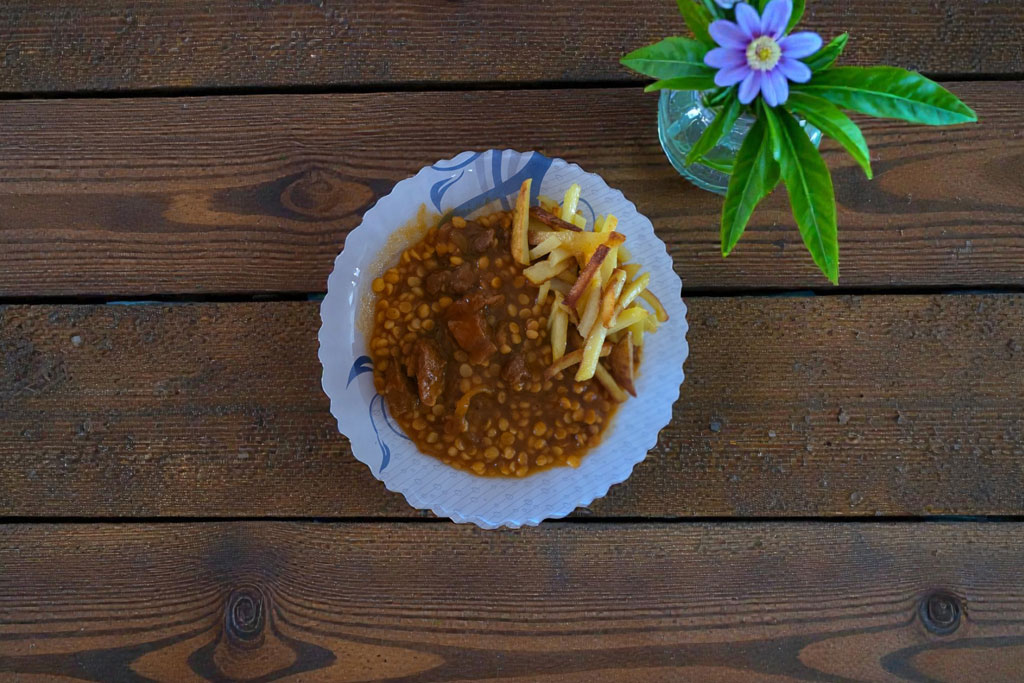

Zereshk Polo ba Morgh (Persian Barberry Rice with Chicken)
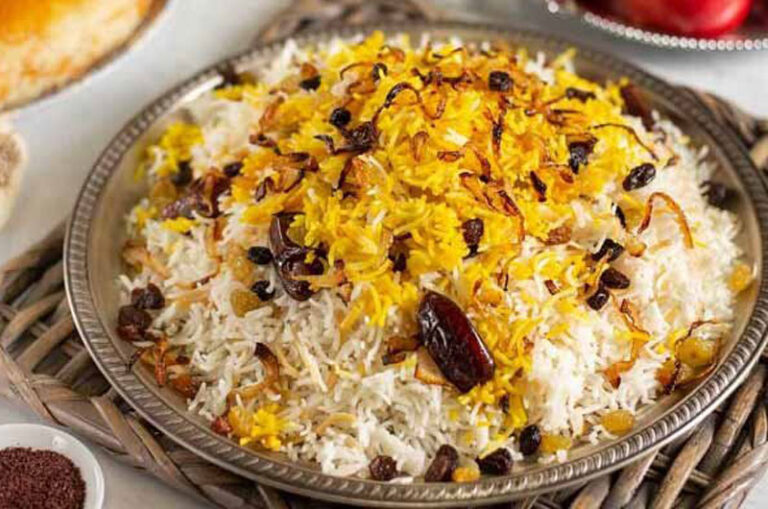
Zereshk Polo ba Morgh is one of the most popular and festive dishes on Iranian tables. In fact, because it is more economical than many grilled dishes, it is often the preferred choice for large gatherings. From religious ceremonies and charity food distributions (nazri) to engagement parties, weddings, and almost any formal or informal gathering, Zereshk Polo ba Morgh is a nearly constant and much-loved option.
The combination of the tart flavor of barberries with a subtle sweetness added during cooking, along with the dish’s beautiful appearance—especially when served with caramelized onions and rich chicken sauce—makes this dish truly elegant and irresistible.
Personally, I enjoy serving this festive dish with mast-o-khiar (Persian yogurt with cucumber) and homemade doogh, although lemonade is also an excellent beverage choice alongside it.
Zereshk Polo ba Morgh: A Comforting Persian Dish for Holidays and Gatherings
I decided to share this Zereshk Polo ba Morgh recipe with you because it works perfectly both as a comforting homemade meal and as an elegant dish for special occasions. It can even be served during Christmas celebrations as a unique and festive main course. (As I am writing this, Christmas is just around the corner—so, Merry Christmas!)
Iranians often serve this flavorful and visually appealing dish alongside an additional khoresh, such as Gheymeh or Ghormeh Sabzi, so guests can choose between rice served with stew or with chicken. This approach not only offers variety but also creates a more colorful and generous table for gatherings.
The rice used for this dish is essentially classic Persian restaurant-style steamed rice, which is fully explained on this website. By simply adding a khoresh, you can easily present two different main dishes using the same rice base.
And of course, don’t forget to serve Salad Shirazi alongside this meal.
How to Make Zereshk Polo ba Morgh
Course: Main, Dinner, LunchCuisine: IranianDifficulty: Easy4
servings30
minutes2
hoursIngredients
- For the Chicken
Chicken pieces 4 pieces (thighs or breasts, preferably bone-in)
Onions 3 medium, thinly sliced
Tomato paste 2–3 tablespoons
Turmeric 1 teaspoon
Black pepper to taste
Cinnamon a small pinch (optional)
Brewed saffron 2–3 tablespoons
Boiling water enough to just cover the chicken
Cooking oil as needed
Salt to taste
- For the Rice
Iranian rice 4 cups
Salt as needed (for soaking and boiling)
Water as needed
Oil or butter as needed
Brewed saffron as needed (for saffron rice)
- For the Barberries
Dried barberries (zereshk) 1 cup
Sugar 1–2 tablespoons (adjust to taste)
Butter or oil 2 tablespoons
Brewed saffron 1 tablespoon
Directions
- Step 1: Preparing the Ingredients
First, rinse the rice with cold water and let it soak in salted water. At the same time, you may season the chicken with a little saffron and turmeric, then mix it with grated or chopped onion and refrigerate it in a covered container for two to three hours.
This step is optional, and the chicken can also be seasoned during cooking. - Step 2: Cooking the Chicken
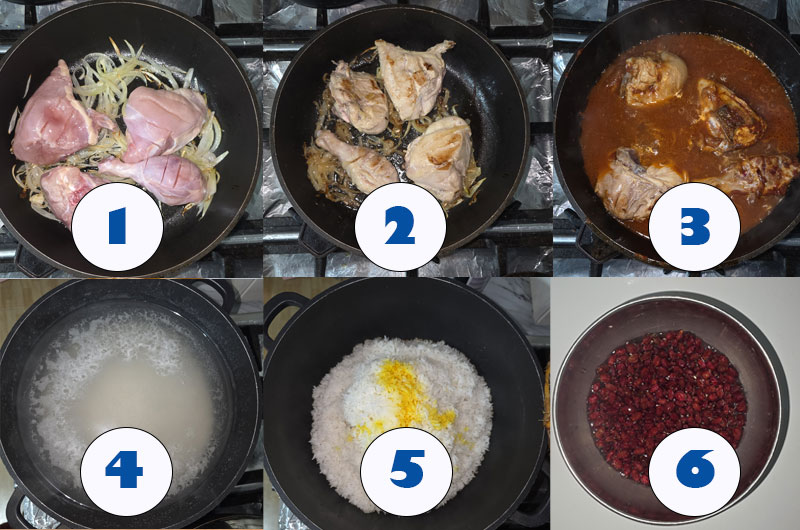
Slice the onions thinly into rings or strips. Add some oil to a pan and allow the onions to slowly caramelize over very low heat. (For best results, refer to a detailed caramelized onion recipe.)
Once the onions are ready, add the chicken pieces to the pan and lightly sear both sides. When the chicken changes color, allow each side to cook for an additional 30 to 60 seconds to develop a nicer appearance. Be careful not to over-fry the chicken—this step is only meant to seal the surface and add color, as overcooking will make the chicken tough.
Also make sure the onions do not burn, as burnt onions will darken the dish and give it a bitter taste. - Step 3: Adding Spices and Tomato Paste
At this stage, add turmeric, black pepper, and a small amount of cinnamon to the chicken. (Cinnamon is optional and can be omitted if preferred.) It adds a delicate aroma and mild warmth to the dish.
After briefly sautéing the chicken with the spices, add the tomato paste. Tomato paste should never be used raw, as it gives an unpleasant raw taste. Sauté it in the oil for one to two minutes until its color deepens and its flavor improves.
Meanwhile, place a pot of water on the stove and bring it to a boil for the rice. - Step 4: Adding Boiling Water
Add an appropriate amount of boiling water to the chicken—just enough to cover the pieces, no more. Using too much water allows the chicken odor to seep into the liquid and results in a diluted, less flavorful sauce.
Leave the pan uncovered for about five minutes and skim off any foam that forms on the surface. Then cover the pan and let the chicken cook over medium heat for 30 to 45 minutes. - Step 5: Preparing the Rice
Once the water reaches a rolling boil, add the rice and cook it until it is ready to be drained. For perfectly fluffy and elegant rice, you can refer to the detailed instructions in the “Persian Restaurant-Style Rice” guide.
After draining the rice, mix a portion of it with brewed saffron to give the dish a beautiful color and rich aroma. - Step 6: Steaming the Rice
For the tahdig, I recommend using thinly sliced potatoes. Arrange the potato slices at the bottom of the pot, add the rice, and pour in the rice oil and water mixture. (Follow the key tips for restaurant-style rice (Polo).)
Allow the rice to steam, then gently spread the saffron-infused rice over the top. - Step 7: Preparing the Barberries
Barberries burn very quickly, so special care is required. Rinse the barberries in cold water and drain them well to remove any dust.
Heat some oil or butter in a separate pan, add the barberries, and then mix in a small amount of sugar and brewed saffron. Using butter instead of oil enhances both the aroma and flavor. Sauté the barberries over very low heat for just a few seconds. - Serving
After the rice is fully steamed, let it rest for about five minutes. This short resting time is one of the secrets to restaurant-quality rice, resulting in better texture and flavor.
Transfer the chicken to a serving dish, separating it from the sauce. Spoon the barberries and saffron rice over the white rice, and serve some of the chicken sauce on the side if desired.
Enjoy 🌿
🟥Common Mistakes to Avoid When Making Zereshk Polo ba Morgh
❌ Don’t add too much water to the chicken
The water should only just cover the chicken. Adding too much water will dilute the sauce and cause the chicken odor to spread into the liquid, resulting in a bland and unpleasant flavor.
❌ Don’t burn the onions
Caramelized onions should be deep golden, not dark brown or burnt. Burnt onions will make the sauce bitter and overly dark.
❌ Don’t over-fry the chicken
The chicken only needs a brief sear (30–60 seconds per side) to seal the surface. Over-frying will make the meat dry and tough.
❌ Don’t add tomato paste without sautéing it
Raw tomato paste gives the dish a harsh, raw taste. Always sauté it in oil for 1–2 minutes until it darkens and becomes fragrant.
❌ Don’t use cold water for cooking the chicken
Cold water shocks the meat and negatively affects texture. Always use boiling or very hot water.
❌ Don’t skip skimming the foam
If foam forms during the initial boiling stage, skim it off. Skipping this step can affect both flavor and appearance.
❌ Don’t cook barberries over high heat
Barberries burn extremely fast. Always sauté them briefly over very low heat, or they will turn bitter.
❌ Don’t oversweeten the barberries
Zereshk should remain slightly tart. Too much sugar will overpower the dish and mask its signature flavor.
❌ Don’t oversalt the rice
If the rice has already been soaked in salted water, avoid adding extra salt during boiling unless absolutely necessary.
❌ Don’t skip resting the rice
Let the rice rest for about 5 minutes after steaming. This step improves texture and gives you restaurant-quality rice.
Final Tip
Zereshk Polo ba Morgh is all about balance—balanced water, heat, seasoning, and timing. Small mistakes can affect the final result, but careful attention to these details will give you a perfectly elegant dish every time.