How to Make Persian Quince Stew (Khoresh Beh)
Quince is one of those delicious fruits that is slightly astringent and quite firm, which can make eating it raw a bit unpleasant. Personally, I’ve never been able to eat a whole quince on its own. Instead, my mother would usually turn quinces into jam or chop them up and store them in the freezer to use later for quince stew (Khoresh Beh).
I have already shared my quince jam recipe on this site, and I highly recommend making it. It’s a jam that is neither sour-sweet like sour cherry jam nor overly soft like rose petal jam. I’ve always loved eating chunks of quince jam with a little cold water — it’s my favorite kind of homemade syrup.
A Sweet Nostalgia
I remember my father’s orchard, which had many quince trees. Every year during quince season, he would bring home baskets full of freshly picked quinces. Their incredible aroma and gentle sweetness always made me happy. This dish is deeply nostalgic for me, which is why I cook it with love.
Quince stew (Khoresht-e Beh) is usually prepared in autumn or winter. Its flavor is malas — a delicate balance between sweet and sour. Here, I’m sharing a formal (majlesi) version of the Khoresh Beh recipe. Cooking should always include a touch of creativity; sometimes adding a spice or a new flavor can make your dish even more colorful and delicious than what you find in restaurants.
Serving Suggestions & Related Persian Stews
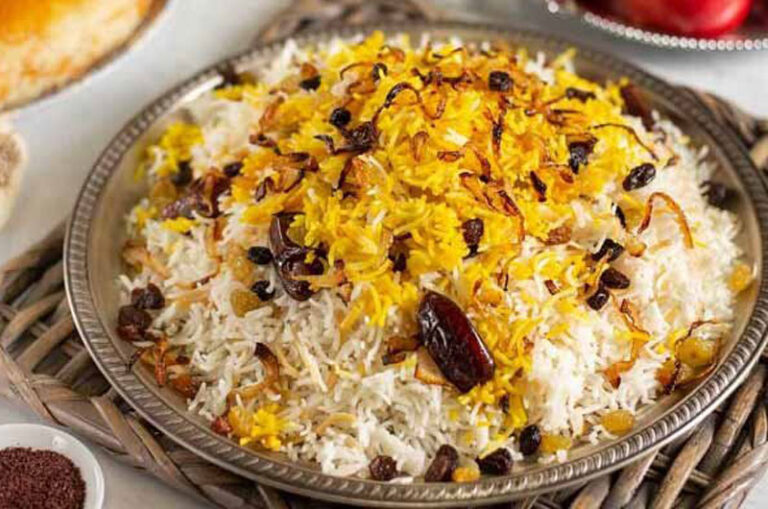
To complete your table alongside this elegant sweet-and-sour quince stew, a restaurant-style Persian rice is the perfect match. You can read my article on majlesi rice (Polo) to learn all the fine details that make a truly excellent restaurant-quality Persian rice.
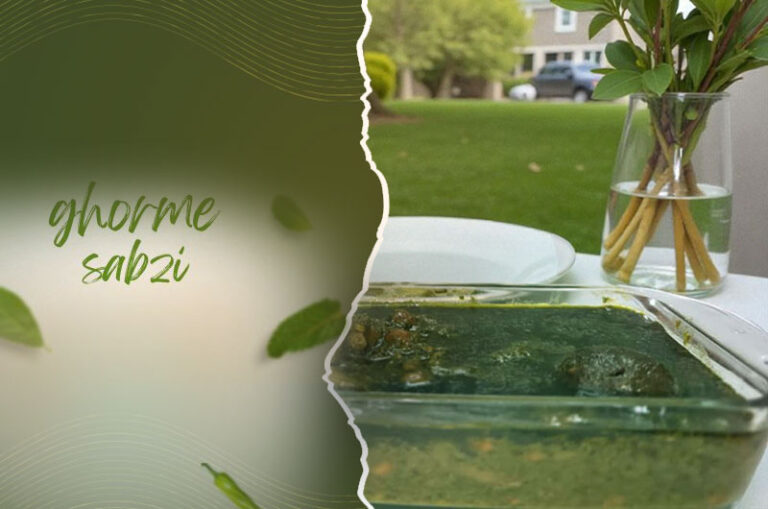
You may also want to explore my other stew recipes, including celery stew, herb stew (Ghormeh sabzi), and Gheymeh stew. I’m confident you’ll fall in love with them.
4
servings30
minutes3
hoursIngredients for Persian Quince Stew (Khoresht-e Beh)
stewing lamb or beef, cut into chunks 400 gquinces, peeled and cut into large wedges 3 medium
onions, thinly sliced 2 medium
sugar 1–2 tablespoons (adjust to taste)
lemon juice or verjuice 2 tablespoons
tomato paste 1 tablespoon (optional, for color)
dried plums 2–3 (optional, for a more elegant version)
cinnamon 1/4 teaspoon
turmeric 1 teaspoon
Black pepper, to taste
Salt, to taste (added at the end)
Cooking oil, as needed
Boiling water, as needed
Directions
- Step 1: Preparing the Base
Slice the onions thinly and fry them until caramelized (you can refer to a caramelized onion tutorial if needed). Once the onions are golden and soft, add turmeric and black pepper and stir briefly. Then add the stewing meat to the onions and sauté until the meat changes color.
Some people add split peas to this stew, but I personally prefer quince stew (Khoresh Beh) in its simpler form. - Step 2: Adding Water
Add some boiling water to the sautéed onions and meat. Cover the pot and let the meat cook until tender. At this stage, do not add salt, as it will make the meat tough and slow down the cooking process. - Step 3: Preparing the Quinces
Wash the quinces thoroughly and cut them into medium-sized pieces. Many people prefer to cut them into larger chunks. Quinces soften quickly during cooking and release natural sugars and starch, which can make the stew cloudy. Since I enjoy a slightly thicker stew, medium-sized pieces work best for me.
In a separate pan, sauté the quince pieces until they are lightly caramelized and golden. Then add them to the meat mixture. - Step 4: Seasoning
Add sugar, lemon juice or verjuice, and a small amount of cinnamon. In a separate pan, sauté the tomato paste for about one minute, then add it to the stew.
(Tomato paste is not the base of this dish; that’s why, unlike stews such as split-pea stew where tomato paste is added early, it is added at this stage here.) - Step 5: Simmering
Let the stew simmer for 30 to 45 minutes until fully cooked and well combined. For a more elegant version, add two or three dried plums during the last 20 minutes of cooking.
Add salt at the very end. - Final Step: Resting Before Serving
One of the most important secrets of this stew is letting it rest. Quince stew tastes even better the next day. If you cook it today, let it cool completely and gently reheat it the next day, the flavors will be deeper and more harmonious. The sweet and sour elements blend together, and the sweetness becomes more balanced. This is the key to its exceptional flavor.
To reheat, place the pot over low heat, avoid stirring too much, and if the stew becomes too thick, add two or three tablespoons of boiling water. Keep the lid slightly open while reheating.
🟥Common Mistakes in Cooking Quince Stew (Khoresh Beh)
- Don’t add tomato paste at the beginning
- Don’t cut the quince into small pieces
- Don’t cook the quince together with the meat from the start
- Don’t use high heat
- Don’t stir constantly
- Don’t add too much cinnamon
- Don’t add sugar at the beginning
- Don’t add souring agents at the beginning
- Don’t add salt at the beginning
- Don’t serve without resting the stew