Juicy Kabob Koobideh Recipe + No-Fall Secret🔥
Kabob Koobideh is a staple of most Iranian tables at gatherings and celebrations. However, making a truly excellent, tender, and juicy koobideh has its own secrets. Here, I will share all the tips you need to prepare restaurant-style kabob koobideh.
Kabob koobideh is one of the most popular dishes in Iran. In many cases, the final result greatly depends on the quality of the meat and its texture. Out of all the restaurants I have visited, perhaps only one or two have managed to serve a truly juicy and outstanding koobideh. The difference always comes down to proper meat selection, fat ratio, and preparation technique.
Below is the best method for preparing authentic, restaurant-quality kabob koobideh.
How to Make Juicy, Restaurant-Style Kabob Koobideh
Juicy Kabob Koobideh Recipe + No-Fall Secret 🔥
Course: Lunch, DinnerCuisine: IranDifficulty: Easy4
servings30
minutes40
minutesIngredients for Kabob Koobideh (Serves 4)
1 kilogram mixed ground meat
2 medium onions
10–12 grams salt
1 teaspoon black pepper
50–80 grams fresh lamb tail fat (if needed)
Directions
- Step One: Choosing the Right Meat
The best meat combination for koobideh is:
700 grams lamb shoulder with some tail fat
300 grams beef shoulder or beef neck, finely ground
The meat should be ground twice:
First through a coarse grinder plate, then through a fine plate.
Another professional combination:
500 grams lamb shoulder
200 grams lamb flank
300 grams beef shoulder
50–80 grams fresh tail fat
If the fat content is lower than this, the kebab will be dry and tough. If it is higher, the meat will not stay on the skewer and may fall off. The ideal fat percentage for koobideh is approximately 20–25%.
To prepare the mixture, grate two medium onions per kilogram of meat and completely squeeze out the onion juice. If the onion juice remains in the mixture, the kebab will fall apart over the heat.
After mixing the meat and onion pulp, knead the mixture for at least 10 minutes until it becomes sticky and cohesive. When you lift a portion of the meat, it should stretch slightly, indicating proper binding. - Step Two: Resting the Meat
Place the mixture in the refrigerator for at least 2 hours, up to 4 hours. This improves cohesion and reduces the risk of the meat falling off the skewer. - Step Three: Skewering and Grilling
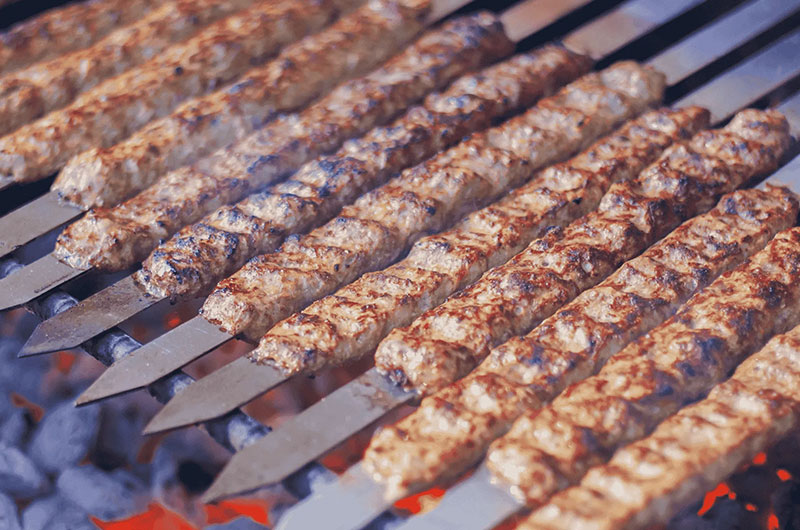
Wet your hands, take a portion of the meat, and firmly press it onto the skewer. Seal both ends tightly.
For professional results, start grilling over high heat so the surface of the meat sets quickly. Then reduce the heat to medium to allow the inside to cook thoroughly.
Important Tips for Juicy Koobideh
- Add salt at the end of kneading, as adding it too early may draw out moisture from the meat.
- You may add a small amount of brewed saffron and freshly ground black pepper for enhanced flavor and color.
- Do not add eggs or breadcrumbs. Authentic koobideh does not require them.
- Continuously fan the kebabs and turn them gently until the surface sets.
🟥What Not to Do
- Do not use lean meat; the kebab will turn dry and tough.
- Do not overuse spices; koobideh should taste like meat, not seasoning.
- Do not add onion juice to the mixture.
- Do not use dirty, greasy, or wet skewers.
- Do not knead for less than 10 minutes.
- Do not skip the resting time.
- Do not use frozen meat; it releases water and loses structure.
- Do not shape the meat unevenly; thicker parts will remain undercooked while thinner parts burn.
- Use skewers at room temperature.
- Do not turn the kebabs excessively; allow one side to set before flipping.
Why Does Kabob Koobideh Fall Off the Skewer?
- Insufficient fat
- Excess onion juice
- Inadequate kneading
- No resting time
- Low initial heat
If You Want Extra Juicy Koobideh
Some restaurants brush the kebabs with melted butter mixed with saffron after grilling.
In other cases, they prepare what is known as “kebab juice” (ab-e kabab), which is a mixture of melted butter, saffron, a small amount of grilled tomato juice, and sometimes meat stock. This mixture is poured over the kebabs before serving.
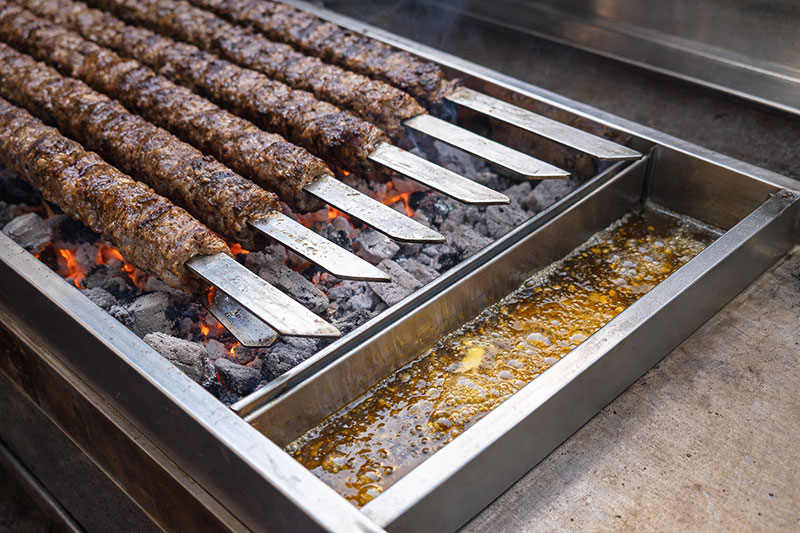
To collect authentic kebab drippings, professional grills are designed with a collection lip or tray. The skewers are placed at a slight angle so the drippings flow toward the edge and gather instead of falling directly onto the charcoal.
Conclusion
If you carefully follow all of these steps, you can confidently prepare a soft, juicy, and truly restaurant-quality kabob koobideh at home.